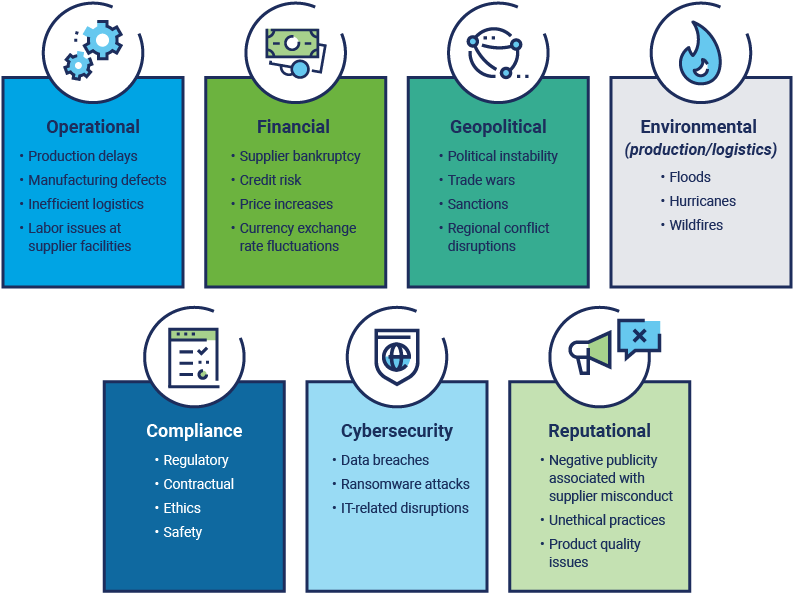
Figure 3.23—Provider, Vendor, and Supply Chain Risk
Source: ISACA, ISACA AAISM Official Review Manual, USA, 2025
From utility services and shared infrastructure to service providers and business partners, no organization operates autonomously. Enterprises rely on a wide range of third parties to operate. Within the course of normal operations, these relationships introduce unique risk (figure 3.23).
Figure 3.23—Provider, Vendor, and Supply Chain Risk
Source: ISACA, ISACA AAISM Official Review Manual, USA, 2025
Widespread adoption of AI has led to organizations creating relationships with new vendors, but it can also impact existing relationships. It is important to understand the nuances of AI’s effects on these relationships.
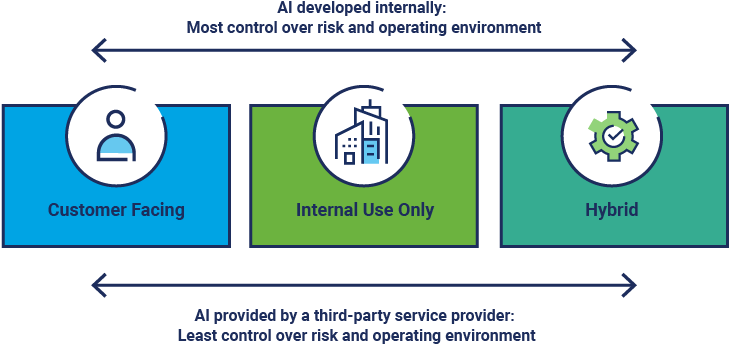
First, it is critical to understand the threats and shared responsibilities typical of vendor and supplier relationships. Understanding the context of an AI system’s use within its operating environment is important, as context can have different implications for an organization’s response strategies and may shift legal liability and responsibility from one entity to another. Figure 3.24 illustrates this relationship.
Figure 3.24—AI Contextualization
Source: ISACA, ISACA AAISM Official Review Manual, USA, 2025
Existing vendor management programs should be reviewed and updated to include AI considerations, especially as many existing vendors may include AI features in their services with or without the prior knowledge of the enterprise. As a result, new risk can be introduced, including:
Integrating AI-centric features into a vendor management program demonstrates a proactive, efficient, and comprehensive approach to how an organization manages AI-related risk. Integration is essential not only for protecting data but also for ensuring compliance, maintaining operational resilience, and fostering consumer and stakeholder trust.
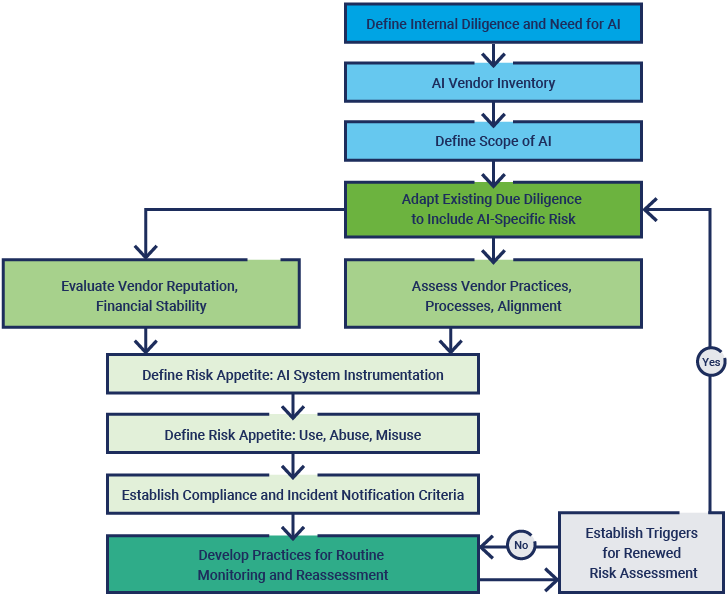
Figure 3.25 illustrates a potential approach to AI vendor management. The steps in the example provide a means to potentially reduce organizational risk during the vendor vetting process, before the enterprise becomes so reliant on the vendor or contracted service that its discontinuation would disrupt or greatly impact the business.
Figure 3.25—An Approach to AI Vendor Management
Source: ISACA, ISACA AAISM Official Review Manual, USA, 2025
The following are common contributors and influencing factors for not selecting a vendor and should be considered during the normal vetting process:
These factors can be applied to general technologies but may be amplified in the context of AI.
When evaluating the use of a third-party AI solution, primary concerns include:
There are some situations in which a provider or vendor is considered high risk, but an organization chooses it anyway because the associated risk can be adequately mitigated, transferred, or accepted.
On the other hand, an AI vendor could be found to exceed an organization’s acceptable risk appetite and tolerance criteria. Its inherent characteristics, lack of maturity, unwillingness to cooperate on risk assessment, or the nature of its AI technology’s use in the organization’s applications might create significant potential for negative impacts that the organization could not adequately understand, control, or mitigate through contractual terms, technical safeguards, or operational procedures. The expected benefits of using the AI vendor would then likely not outweigh the potential risk.
When selecting a vendor to deliver on AI services, several business considerations need to be carefully weighed to ensure a successful and beneficial outcome. These considerations span strategic alignment, risk management, data handling, technical capabilities, the vendor’s team and expertise, cost and ROI, the nature of the vendor relationship, and legal and ethical implications (figure 3.26).
Figure 3.26—Business Considerations for AI Vendor Selection
| Domain | Actions |
|---|---|
| Alignment with business strategy and goals |
|
| Risk management, cybersecurity, and incident response |
|
| Data governance and quality |
|
| Capabilities and integration |
|
| Expertise and support |
|
| Compliance |
|
Source: ISACA, ISACA AAISM Official Review Manual, USA, 2025
By carefully considering and addressing these factors when considering and selecting an AI provider, organizations can make the most well-informed decisions possible, maximizing potential benefits while also keeping risk within appropriate boundaries.
Figure 3.27 lists common elements of an AI vendor contract.
Figure 3.27—AI Vendor Contract Considerations
| Consideration | Description |
|---|---|
| Scope and deliverables | Outline and define the scope of services provided and deliverables. |
| Data inputs and outputs | Define:
|
| Intellectual property (IP) | Clearly identify which party owns:
|
| Compliance and legal considerations | Ensure compliance with relevant regulations and laws as required by the jurisdiction both parties are subject to. Liability for incidents and negative impacts of AI should be well defined. |
| Service level agreements (SLAs) | Establish clear expectations regarding service availability, incident response times, data security, compliance obligations, and other operational metrics relevant to AI solutions. Include clauses for regular reviews. |
| Security and privacy considerations | Ensure vendor security and privacy practices conform with those of the enterprise. Considerations include:
|
Source: Dullea, E.; Dolen, S.; et al.; “Key Considerations in AI-related Contracts,” 19 August 2024, link; Bishop, J.; Stothart, S.; “Artificial Intelligence (AI) Agreements Checklist,” LexisNexis, 2 February 2025, link
Vendor lock-in is a significant challenge and risk in AI supply chains, particularly when leveraging cloud-hosted AI solutions or proprietary AI platforms. Lock-in occurs when an organization becomes dependent on a single vendor’s technology, services, or infrastructure, making it difficult, costly, or operationally disruptive to switch providers or migrate data and workloads. This dependency can limit flexibility, increase costs over time, and expose the organization to strategic risk if the vendor’s service quality declines, pricing changes unfavorably, or the vendor discontinues support. Vendor lock-in also complicates compliance efforts, especially when data residency or jurisdictional requirements must be met, as migrating data across providers or regions may be restricted or technically challenging.
Operational impacts of vendor lock-in include reduced control over infrastructure and potential performance issues due to network latency or shared resource models inherent in cloud environments. Strategic impacts encompass diminished negotiating power, constrained innovation, and increased exposure to vendor-specific vulnerabilities or failures. Organizations should weigh this risk carefully when deciding between internal hosting and cloud-based AI solutions, considering factors such as scalability, cost, control, and alignment with long-term business objectives.
To mitigate vendor lock-in, organizations should:
The use of open-source software by enterprises and vendors alike creates additional considerations in AI.
It offers advantages such as accelerated development, cost efficiency, and access to a broad community of contributors. However, its use introduces unique challenges related to licensing compliance, security vulnerabilities, and the complexity of maintaining a comprehensive inventory and monitoring process.
Open-source components are governed by a variety of licenses, each with specific terms and conditions that dictate how the software can be used, modified, and redistributed. Failure to comply with these licensing requirements can expose an organization to legal liabilities, including IP infringement claims and potential financial penalties. In the context of AI, where models and codebases often incorporate multiple open-source software libraries, it is critical to conduct thorough license reviews and ensure that all open-source usage aligns with organizational policies and contractual obligations. Clear documentation and contractual provisions should address ownership and usage rights, especially when AI-generated content or code is involved, to prevent ambiguity in IP ownership. Legal counsel should be engaged to review open-source licensing implications during vendor selection and contract negotiation phases.
Open-source components can introduce security vulnerabilities into AI systems, as they are often widely used and publicly accessible, making them attractive targets for attackers. Vulnerabilities may arise from outdated libraries, unpatched bugs, or malicious code contributions. Given the layered nature of AI supply chains, where third-party and fourth-party vendors may also incorporate open-source software, the risk of supply chain compromise is amplified. Organizations should implement proactive vulnerability management practices, including maintaining an up-to-date inventory of all open-source components, regularly scanning for known vulnerabilities using reputable databases (e.g., National Vulnerability Database, Common Vulnerabilities and Exposures), and applying timely patches or updates. Continuous monitoring and integration of security controls across the AI supply chain are essential to detect and remediate risk before it impacts the AI system’s integrity or availability.
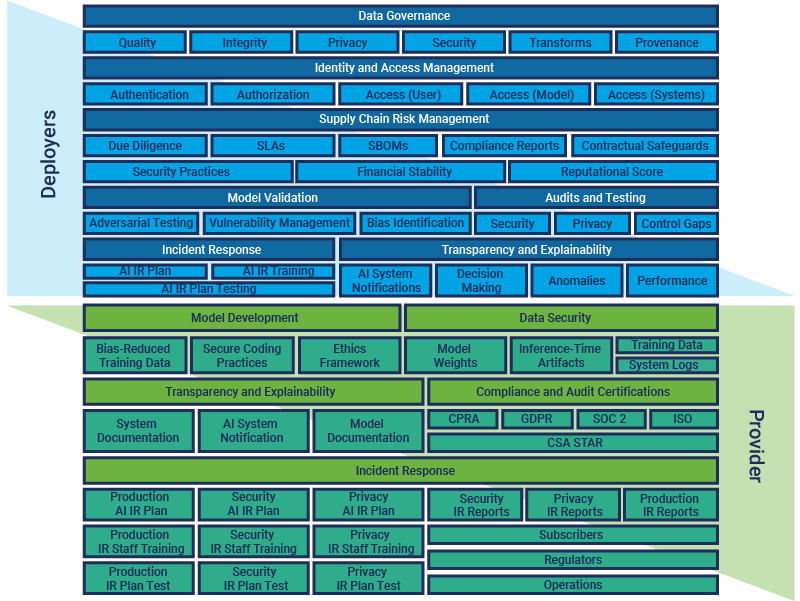
When acquiring AI capabilities from external vendors, distinctions between providers and deployers become crucial for understanding responsibilities and managing risk effectively. Similar to common cloud’s shared responsibility model, an organization that leverages AI services from a provider should clearly understand and delineate the responsibilities shared between the provider and the organization (figure 3.28).
Figure 3.28—AI Shared Responsibility Model
Source: ISACA, ISACA AAISM Official Review Manual, USA, 2025
Defining and requiring a shared approach between entities will need to be addressed contractually with clearly defined expectations related to SLAs, incident response activities, and incident notification requirements.
AI deployers are the consumers of an AI system. Their responsibilities include:
Providers are the entities responsible for delivering AI services to subscribers. They can be organizations that offer AI as a service (AIaaS) or entities that deploy AI systems. Their responsibilities include:
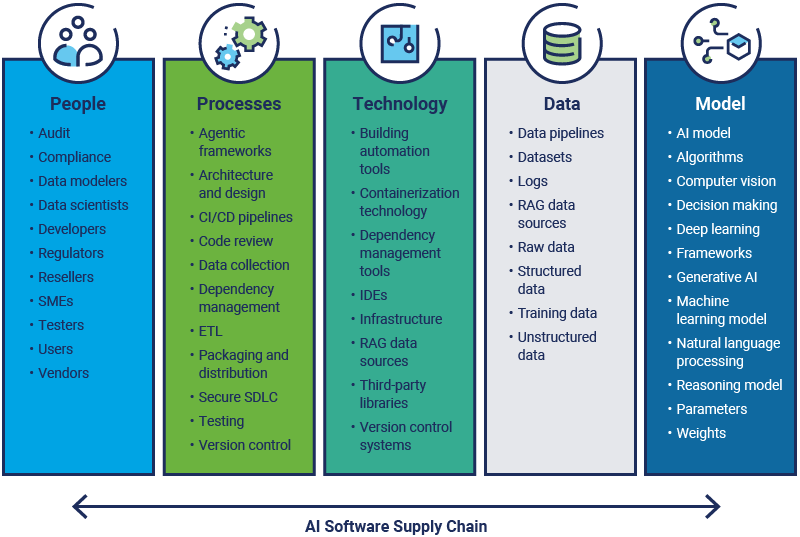
Software supply chain risk is nothing new; however, traditional supply chain risk management addresses individual components vs. entire systems. Managing AI software supply chain risk is needed not just to reduce the attack surface or remediate vulnerabilities, but to protect an enterprise’s brand, reputation, and trust. Therefore, it is important to fully understand the AI supply chain.
Figure 3.29 illustrates the corresponding dimensions of people, processes, technologies, data, and models.
Figure 3.29—People, Processes, Technology, Data, and Model Dimensions
Source: ISACA, ISACA AAISM Official Review Manual, USA, 2025
Because AI is such a rapidly evolving field, it is important to adhere to best practices for monitoring the performance of a vendor’s AI solution:
These best practices emphasize the importance of continuous monitoring, robust security measures, careful data management, effective interaction strategies, and practical considerations for building and deploying LLM applications.
There are a number of roles and responsibilities associated with the AI software supply chain. Figure 3.30 identifies each party, describes characteristics, and cites examples. Any mention of a product or service is purely for reference purposes and is not intended to be an endorsement or warranty of any kind.
Figure 3.30—AI Software Supply Chain Parties
| Party | Characteristics | Examples |
|---|---|---|
| First Party | The consumers of an artificial intelligence (AI) system | The enterprise customers |
| Third Party | The entities an AI provider directly contracts or collaborates with (e.g., data providers, model developers, or cloud service providers) | AWS; Google; OpenAI; Hugging Face; Snowflake |
| Fourth Party | Vendors or subcontractors a third-party vendor relies on—the vendors of vendors | Cloudflare; TSMC; Dell; Microsoft |
| Fifth Party | Vendors that fourth-party vendors rely on, continuing the chain of outsourcing | ASML Holdings; Equinix; SAP; Microsoft; Oracle |
| Nth Parties | Vendors beyond the third party within a given relationship ecosystem, depending on how many levels of dependencies exist (fourth, fifth, sixth, seventh, etc.) | Power utilities; Environmental services; Data center facilities management |
Source: ISACA, ISACA AAISM Official Review Manual, USA, 2025
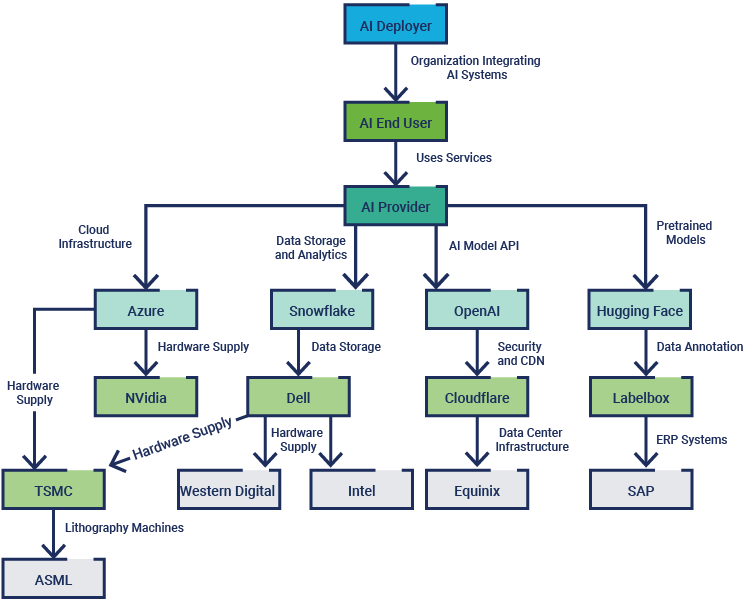
Figure 3.31 illustrates the concepts of the AI relationship ecosystem. (Note: Parties in the example are for illustrative purposes only and are not intended to represent any enterprise or service provider.)
Figure 3.31—AI Relationship Ecosystem
Source: ISACA, ISACA AAISM Official Review Manual, USA, 2025
Visualizing these relationships can help an enterprise understand how AI solutions are built and address any concerns along the line. The depth of the parties involved in the supply chain can also help the enterprise to make an informed decision about whether or not it wants to engage with an AI provider.
When implementing AI solutions, organizations will have to choose a hosting strategy that best meets their needs and means. As with most technologies, hosting an AI solution on premises will result in greater overall control and potential for customization. However, there will be added costs related to computing resources, power, and potentially personnel. For cloud implementation, there is overall greater scalability and potential integrations. However, organizations may be at greater risk of vendor lock-in or uncontrollable cost fluctuations from providers. Figure 3.32 lists the benefits and limitations of internal vs. cloud-hosted AI solutions.
Figure 3.32—Benefits and Limitations of AI Hosting Options
| Internal | Cloud | |
|---|---|---|
| Benefits |
|
|
| Limitations |
|
|
Source: ISACA, ISACA AAIA Official Review Manual, USA, 2025
When hosting in the cloud, AI developers and those managing relationships with the applicable third parties need to consider contractual obligations and, potentially, compliance risk-related concerns. For example, if data to be leveraged for training of an AI solution is covered by privacy laws, the physical location of a cloud hosting provider may be of increased concern. Oversight of AI solution vendors is essential to ensure not only data security and privacy but also alignment with the organization’s overall AI strategy.
A foremost risk in cloud-based AI supply chains is data jurisdiction. Cloud service providers (CSPs) often operate data centers across multiple countries and regions, which may subject stored or processed data to varying legal and regulatory regimes. Organizations outsourcing AI workloads to the cloud must understand where their data physically resides and how this impacts compliance with privacy laws, data protection regulations, and contractual obligations. Failure to control or verify the data location can expose enterprises to legal liabilities, especially when handling sensitive or regulated information. It is critical that contractual agreements with CSPs explicitly address data residency requirements and compliance responsibilities to mitigate this risk.